
What we do
Many ask us what we do every day as ranchers. If you ask my dad, he might answer “drink coffee and eat bon bons”. You can ask my mom, and she may say something like “run around like chickens with our heads cut off”. From January to December our years are similar, but the one thing we all enjoy is, about the time some task or season has us worn to the bone, a new season and a change of jobs are just around the corner.
We start our year off by getting ready for calving season. January is filled with repairing facilities and purchasing supplies for the busiest time of year. We usually see our first calf before the end of the month even though the due date isn’t usually till the first week of February. Babies, doesn’t matter the species, seem to have a mind of their own.
February usually arrives with cold weather, fresh banks of snow and our most favorite thing…new baby calves. For what seems like forever we have been calving our cows in the coldest months of the year out on the flat pastures that make up our home. The questions usually pour thick when we start canceling plans or letting people know that we won’t be making it anywhere- why calve in February, when do you sleep? We calve in February to have the right size of calves for the feeders when they need them in the fall, but also with frozen ground we don’t see parasites or diseases that you see during a warm and wet spring. When that weather arrives later our calves are older with stronger immune systems. The challenges vary from year to year with how intense Montana winters can be, but we have learned a lot and are very prepared. It is currently only the three of us that usually do all the calving rotating shifts and lending extra help here and there when needed. This is the time of year our merit is really tested and our support of each other is crucial.
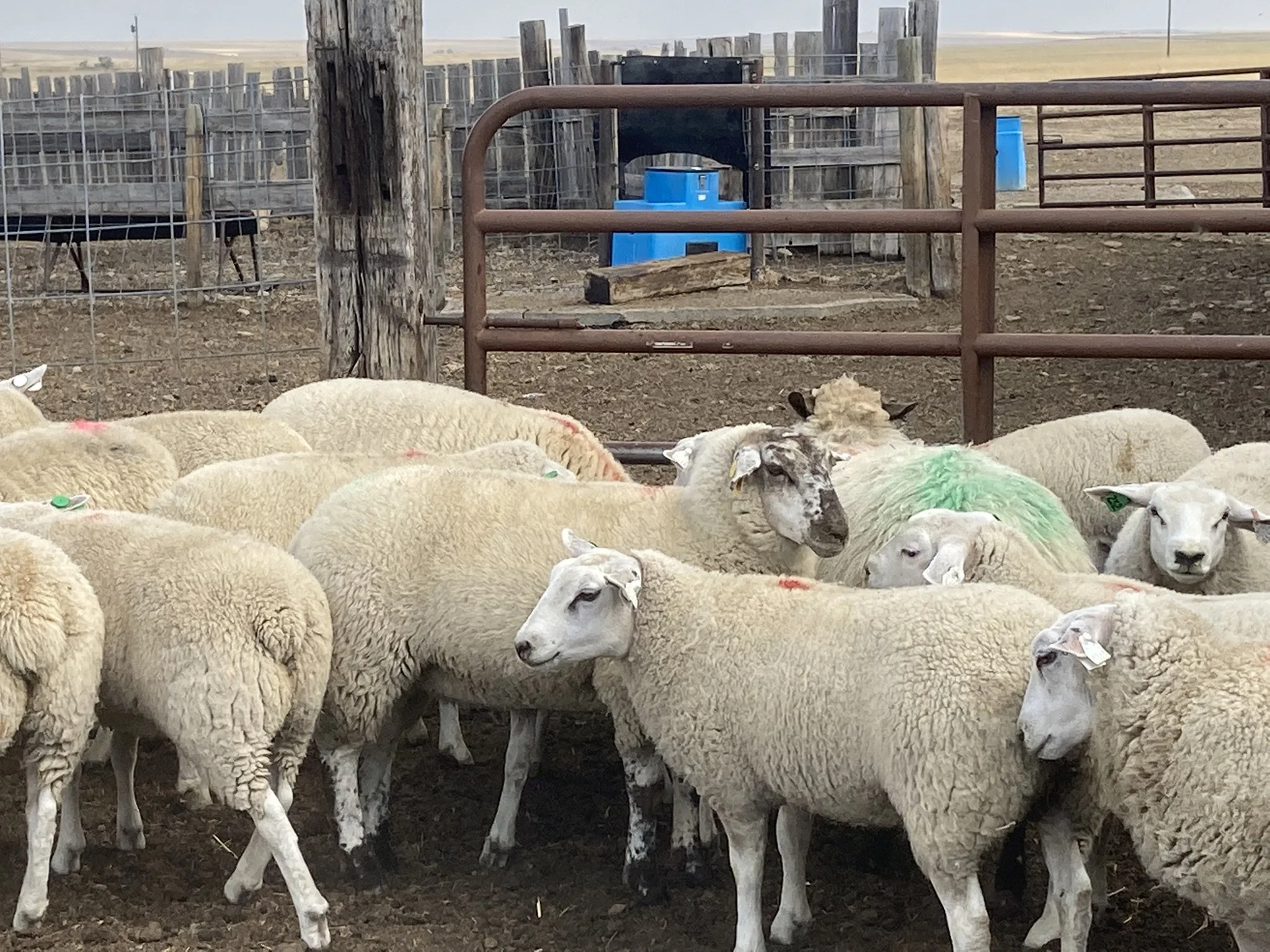
We transition slowly into March, where the calving seems to slow and we eagerly anticipate newborn lambs. Organizing the barn a little differently to accommodate the smaller fluffy creatures. Sheep have been a passion of my mothers that she has bestowed upon me. We have raised many breeds over the years. The two breeds that we have really fallen in love with, the taste of the wild Icelandics, and the temperament and thickness of the Texels. Still going through the motions day to day with little sleep this is also a time filled with wonder and joy, because no one can resist cute, fluffy newborn lambs!
April heralds some warmer weather and lambing season slows way down, the grass isn’t coming in strong yet, so dad’s mornings are still filled with feeding all the critters and their newest sidekicks. While mom and I are usually shuffling critters around and getting ready for the next changing season. Our next season we are keen on is breeding season for the cattle. We have been artificially inseminating a good number of animals for ourselves and some of our neighbors, for quite a while. My mother is an excellent AI technician, and I try my best to keep up. We stay busy with daily chores and working cattle through the corral with treatments like vaccinations, heat syncing and heat detecting. AI season is brief, but busy, trying to time everything accordingly before we let our home-grown bulls out to do their jobs.
May is our month to pray for rain. Hopefully we will get enough to make a hay crop. Some of the cow calf pairs can be moved further from the house. With this transition we are doing less hay feeding and more fence and water checking. If you didn’t know, cows are hard on any type of fence and they need constant monitoring. This is the start of our grass expert’s (Dad) daily supervision of pastures and farmland. But this is also tied to the previous fall and early spring where some plants were planted so they can emerge at just the right time. We start seeing our winter wheat sprout and our alfalfa plants reemerging. The job to do now is to keep the cows on good grass and not overgraze any fields. Rotational grazing is one of the most important tools that we, as ranchers, can do to protect the health of our soil and our animals. Salt and mineral also need to be checked on a regular basis. Since the cattle are further from the house, this becomes a time to check animals while replacing quantities and enjoy the scenery!
Whew, June comes to take a few days off and go do something different. The cows are good, sheep out to pasture and the sun is shining. While we have probably gotten a day here and there to see things off the ranch, they are few and far between. Time to hopefully visit family and friends. Late June is when haying is likely to start. Also, a good time to look at what new projects we would like to accomplish.
Happy Birthday to our Country! Haying is going and so is getting ready to help neighbors with the firework display. This is a yearly project that we like to take part. Barbecue and a cold beverage makes for a good day to appreciate our independence. We hope haying drags on for a while as that would indicate a good hay crop and plenty of feed for the animals. Better than haying with your checkbook. Tired of going in circles but it is worth it.
August is another break to visit before the busy work of September arrives. Making sure the animals have water is the of the greatest importance in the heat. Cows with calves’ drink way more water than you think. Gallons and gallons of water to satisfy their thirst. Hopefully things are not burning up, and we do keep an eye out for fire. I am on the volunteer farmer-rancher part of the fire department, and we help out whenever we get the call.
Go, it’s September! Calves to wean, cows to pregnancy test, and time to check the hay yards to see if they are full. Time to finish any projects and enjoy the cooling weather. Hopefully we had a good hay crop and are hauling hay to the yards. Listening and getting the bawling calves on feed to start knowing which ones will stay and which ones will be leaving on the semi to Iowa. We wean our calves in two groups, the ones at home and the ones at summer pasture up in Millegan. My great grandmother was raised there when she was very young, and we continue to take care of the land and remember the stories. From the garden that they used to tend in the oasis ¼, where from a diversion on the neighbors the water looks like it runs up hill to the ¼. To the steep ravine where the cattle go to water and we ride to bring them home in the winter. What a beautiful place they allowed us to purchase. 4 generations, I am the fifth and hopefully one of my girls will be the sixth!
October is the month of pay day! Calves go to market and on the road. We will see how much they gained in the last month since they were weaned. Hopefully we marketed them well in the spring NS GOT A GOOD PRICE. It can be very worrisome, but we have always made do and been blessed. We are now getting groups together to start AI-ing sheep. We have done VAI for quite a while with both breeds, and it works to bring in new genetics for our registered herds. We did purchase new Hamp rams this year for cleanup rams on our texel and cross ewes. They are quite nice coming from Belgian Hill up by Valier. Hunting began and with it, calls from hunters. We enrolled our land in the block management program. This way we can welcome the public to harvest deer on our land in an organized manner. Yes, we are compensated for this, but it makes for better utilization and keeping numbers in check. We do not set animal numbers, as this is done by Montana fish and game, but it gives the public a place to go and animals to harvest. Families either get good food, good memories, or both.
November is the month to give thanks for not just a turkey but family and friends/ if the weather allows, we finish up projects that we have not quite got done or work in the shop because Christmas is right around the corner. There is always something to do, whether it is processing animals, tanning hides or building feeders. I am a welder by trade, and it has come in very handy on the ranch. Hopefully we will be together for the big turkey day, but if not, we will be happy knowing that we are all healthy and happy and well fed. The cows will be coming home from Millegan at the end of November or first week of December. When we wean the calves in September, we leave the cows up there to get a little time for themselves and put on a little weight. If the weather had not cooperated, we might have had to bring them home early but not this year.
Now the days are short in December. Can’t wait till the 21st until they start to lengthen. Feeding cows every day, having the cows from Millegan preg checked and vaccinated for the arrival of calves at the end of January, our year is almost complete. Sometimes we go cut a Christmas tree and other times we buy a living tree that we can plant. Just have to make sure we have a hole ready outside as they do not winter inside well. Have we done everything this year? Planted a garden, pruned the trees, took time for ourselves? I am sure we have missed a few things but there is always next year. We are great next year people. Pushing on to survive and thrive through the generations.
Some of the extra critters on the place that haven’t been mentioned are the Horses, Dogs, and llama. We have two Fjord horses to play with. They spend most of their time out in the pasture looking majestic. Border collie dogs help us work both cattle and sheep. We have found them to be intelligent and hard workers that save us a lot of steps with the animals. They have been invaluable in the past. Our llama, Cousco, guards our sheep and take his job very seriously. We have had problems with coyotes in the past but with Cousco on duty we have had minimal losses. We have had a long history with llamas on the ranch, and I could not imagine running sheep without one.
Boo LeVeque 2025